Happiness is one of the most beautiful emotions we can express, yet sometimes simple words like “happy” or “joyful” feel too small to capture its full glow. That is where similes come in. Similes help us paint pictures with language, turning ordinary sentences into colorful expressions full of life.
They allow writers to compare feelings, moments, and experiences in ways that readers can see and feel. In figurative language, similes are powerful tools because they create strong mental images and emotional connections. Just as trees stand tall through storms and seasons, growing stronger with time, similes help language grow deeper roots and stronger meaning.
Trees symbolize strength, growth, resilience, wisdom, and even human emotion — much like happiness itself, which rises and spreads like branches reaching toward the sun. When we compare happiness to nature, light, music, or movement, we make it vivid and unforgettable. In this guide, you will discover the best similes for being happy and learn how to use them effectively in your own creative writing.
What Is a Simile?
A simile is a figure of speech that compares two different things using the words “like” or “as.” It helps describe something more clearly by linking it to a familiar image.
Example:
She was as happy as a child on the first day of summer.
This comparison helps readers instantly understand the depth of her joy. Similes are common in poetry, stories, songs, and even academic writing because they make descriptions stronger and more engaging.
1. As Happy as the Sun Breaking Through Clouds
Meaning:
This simile compares happiness to sunlight suddenly appearing after darkness, symbolizing hope and relief.
Usage Insight:
Use this simile when describing emotional recovery, good news, or a positive turning point in a story.
Example Sentences:
- After hearing the good news, she was as happy as the sun breaking through clouds on a rainy day.
- His smile was as bright and warm as the sun breaking through clouds after a storm.
2. As Happy as a Bird Set Free
Meaning:
This simile suggests freedom, lightness, and excitement.
Usage Insight:
Perfect for moments of liberation, graduation, or finishing a difficult task.
Example Sentences:
- When the exams finally ended, the students felt as happy as birds set free.
- She ran toward her dreams, as happy as a bird released into the open sky.
3. As Happy as a Child in a Candy Store
Meaning:
This comparison reflects pure excitement and delight.
Usage Insight:
Ideal for describing innocent joy or overwhelming excitement.
Example Sentences:
- He looked as happy as a child in a candy store when he opened the gift.
- Seeing the playground again made her as happy as a child in a candy store.
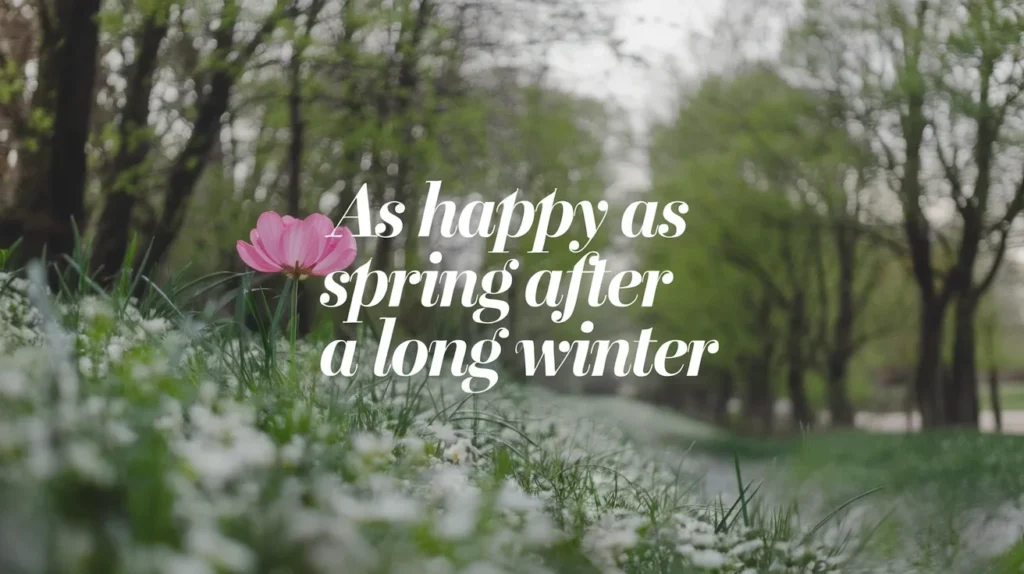
4. As Happy as Spring After a Long Winter
Meaning:
This simile symbolizes renewal, fresh beginnings, and hope.
Usage Insight:
Works beautifully in nature similes and emotional rebirth scenes.
Example Sentences:
- After months of struggle, she felt as happy as spring after a long winter.
- His laughter sounded like spring after a long winter, full of warmth and promise.
5. As Happy as Waves Dancing in the Sunlight
Meaning:
This comparison suggests playful, shining joy.
Usage Insight:
Great for describing carefree moments and lively celebrations.
Example Sentences:
- The children were as happy as waves dancing in the sunlight.
- Her spirit shimmered like waves dancing beneath the golden sun.
6. As Happy as a Tree in Full Bloom
Meaning:
This nature simile symbolizes growth, beauty, and fulfillment.
Usage Insight:
Perfect for personal achievements or emotional maturity.
Example Sentences:
- After years of hard work, he stood as happy as a tree in full bloom.
- She glowed with pride, as happy as a tree bursting into blossom.
7. As Happy as Music Filling a Quiet Room
Meaning:
This simile reflects warmth, harmony, and emotional richness.
Usage Insight:
Ideal for describing peaceful happiness or meaningful reunions.
Example Sentences:
- Their reunion was as happy as music filling a quiet room.
- His laughter flowed through the house like music filling a silent space.
8. As Happy as Stars Lighting Up the Night
Meaning:
This comparison symbolizes shining, sparkling joy.
Usage Insight:
Use in poetic writing or romantic scenes.
Example Sentences:
- She was as happy as stars lighting up the night sky.
- His eyes sparkled like stars glowing in the darkness.
9. As Happy as a River Running to the Sea

Meaning:
This simile suggests natural fulfillment and destiny.
Usage Insight:
Effective for stories about achieving dreams or life goals.
Example Sentences:
- He felt as happy as a river running freely toward the sea.
- She followed her passion, as happy as water finding its home.
10. As Happy as Laughter Echoing in the Hills
Meaning:
This comparison reflects contagious and expansive joy.
Usage Insight:
Great for describing shared happiness or group celebrations.
Example Sentences:
- Their joy was as happy as laughter echoing across the hills.
- The festival felt alive, like laughter rolling through open valleys.
11. As Happy as Rain After a Drought
Meaning:
This simile symbolizes relief and deep gratitude.
Usage Insight:
Works well in emotional or dramatic writing.
Example Sentences:
- When help finally arrived, they were as happy as rain after a drought.
- Her success felt like rain blessing dry earth.
12. As Happy as a Butterfly Finding Flowers
Meaning:
This nature-based comparison reflects light, gentle happiness.
Usage Insight:
Best for soft, poetic descriptions.
Example Sentences:
- She skipped down the path, as happy as a butterfly finding flowers.
- His heart fluttered like wings discovering a colorful garden.
13. As Happy as Fireflies on a Summer Night
Meaning:
This simile represents magical, glowing joy.
Usage Insight:
Ideal for nostalgic or dreamy scenes.
Example Sentences:
- The evening felt as happy as fireflies glowing in warm darkness.
- Her smile flickered like fireflies on a quiet summer night.
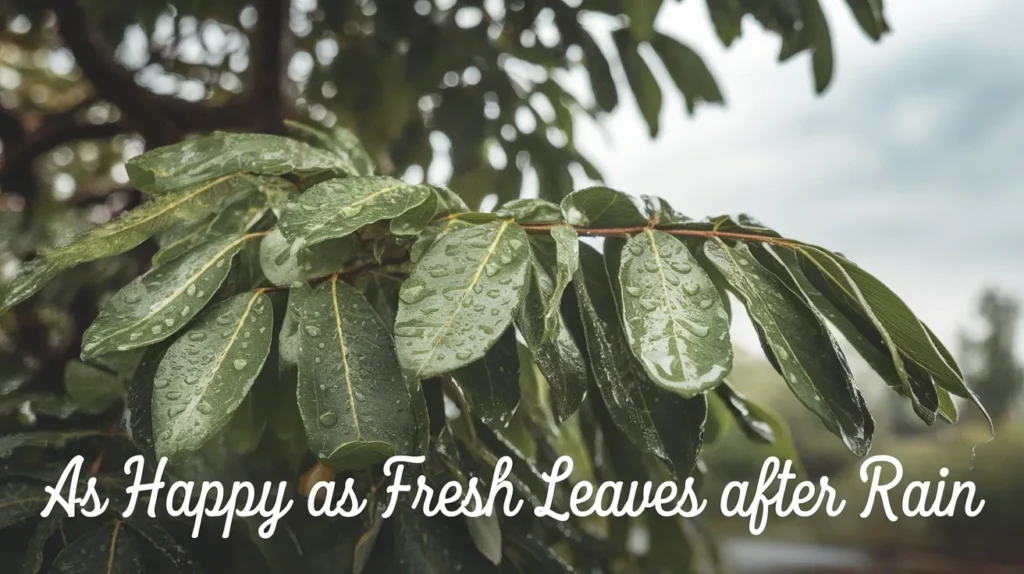
14. As Happy as Fresh Leaves After Rain
Meaning:
This simile suggests freshness and renewed energy.
Usage Insight:
Excellent for describing recovery or new beginnings.
Example Sentences:
- After resting, he felt as happy as fresh leaves after rain.
- She walked into the future, as renewed as leaves washed clean by a storm.
15. As Happy as the First Light of Dawn
Meaning:
This comparison symbolizes hope, clarity, and peaceful happiness.
Usage Insight:
Use for calm, reflective joy.
Example Sentences:
- She felt as happy as the first light of dawn touching the horizon.
- His heart opened gently, like dawn spreading across the sky.
How to Use Similes Effectively in Writing
Using the best similes for being happy can transform ordinary sentences into powerful figurative language examples. Here are practical tips for making your comparisons shine:
1. Keep It Natural
Choose similes that match the tone of your writing. Avoid forcing comparisons that feel unnatural.
2. Use Nature for Strong Imagery
Nature similes often work best because readers easily connect with sunlight, rivers, trees, and stars.
3. Avoid Overuse
Too many similes can overwhelm the reader. Use them strategically for impact.
4. Match Emotion to Image
Make sure the comparison truly reflects the level of happiness being described.
5. Use in Different Forms of Writing
- Poetry: Enhance rhythm and emotional depth.
- Stories: Reveal character feelings vividly.
- Essays: Add clarity and memorable examples.
- Songs: Create emotional resonance.
- Creative Descriptions: Strengthen imagery and tone.
Similes in literature have been used for centuries to create unforgettable comparisons. They help readers feel emotions instead of just reading about them.
FAQs
1. What are the best similes for being happy?
The best similes for being happy compare joy to bright, natural, or uplifting images such as sunshine, blooming trees, birds in flight, or laughter in open spaces.
2. What is the difference between a simile and a metaphor?
A simile uses “like” or “as” to compare two things, while a metaphor directly states that one thing is another.
3. Are similes important in creative writing?
Yes, similes add imagery, emotion, and clarity, making writing more vivid and memorable.
4. Can similes be used in academic writing?
Yes, but they should be used carefully and only when they improve understanding.
5. Why are nature similes so powerful?
Nature provides universal images that readers easily recognize, making emotional comparisons stronger and clearer.
Conclusion
The best similes for being happy do more than decorate sentences — they bring emotions to life. Through thoughtful comparisons, writers can transform simple joy into radiant sunlight, blooming trees, dancing waves, or glowing fireflies. These figurative language examples help readers see happiness, feel its warmth, and remember its beauty long after they finish reading. Just as trees grow stronger through seasons, similes strengthen language by adding clarity, imagery, and emotional depth. Whether you are writing poetry, fiction, essays, or songs, the right simile can make your words shine. When you choose comparisons carefully and use them naturally, your writing becomes vivid, meaningful, and unforgettable. Happiness deserves expressive language, and with these similes, your words will glow just as brightly as the emotion itself.
