
Language has a special way of helping us understand emotions that are hard to explain. One of the most powerful tools in writing is the simile. Similes allow us to compare one feeling or experience to something familiar, making abstract emotions easier to see and feel.
When we talk about being alone, words can sometimes feel empty or too simple. That is where the best similes for alone become meaningful. They turn solitude into something vivid, emotional, and deeply human. In figurative language, similes are like strong trees standing quietly in a wide field—rooted, steady, and expressive without speaking.
Trees are powerful symbols of strength, growth, resilience, and wisdom, and they often reflect human emotion. Just like a tree standing alone against the horizon can represent courage or quiet reflection, similes help us express solitude in a way that feels rich and alive.
What Is a Simile?
A simile is a figure of speech that compares two different things using the words “like” or “as.” It helps readers understand an idea by connecting it to something familiar.
Example: He felt as alone as a single star in the night sky.
This comparison makes the feeling of loneliness clearer by linking it to a single visible star surrounded by darkness. That is the power of similes in literature—they create strong emotional and visual connections.
As Alone as a Tree on a Windy Hill
Meaning:
This simile suggests standing independently despite isolation.
Usage Insight:
Use this when describing quiet strength or resilience in solitude.
Examples:
- She stood as alone as a tree on a windy hill, yet she did not bend.
- After the argument, he felt as alone as a tree on a hill facing the storm.
As Alone as a Star in the Midnight Sky
Meaning:
Represents visible isolation surrounded by vast emptiness.
Usage Insight:
Works well in poetic or emotional writing.
Examples:
- He felt as alone as a star in the midnight sky.
- Her thoughts drifted like a star shining alone in endless darkness.
As Alone as a Leaf After Autumn Falls
Meaning:
Suggests separation and quiet abandonment.
Usage Insight:
Ideal for describing loss or emotional distance.
Examples:
- She felt as alone as a leaf after autumn falls.
- His heart lay as alone as a final leaf clinging to a bare branch.
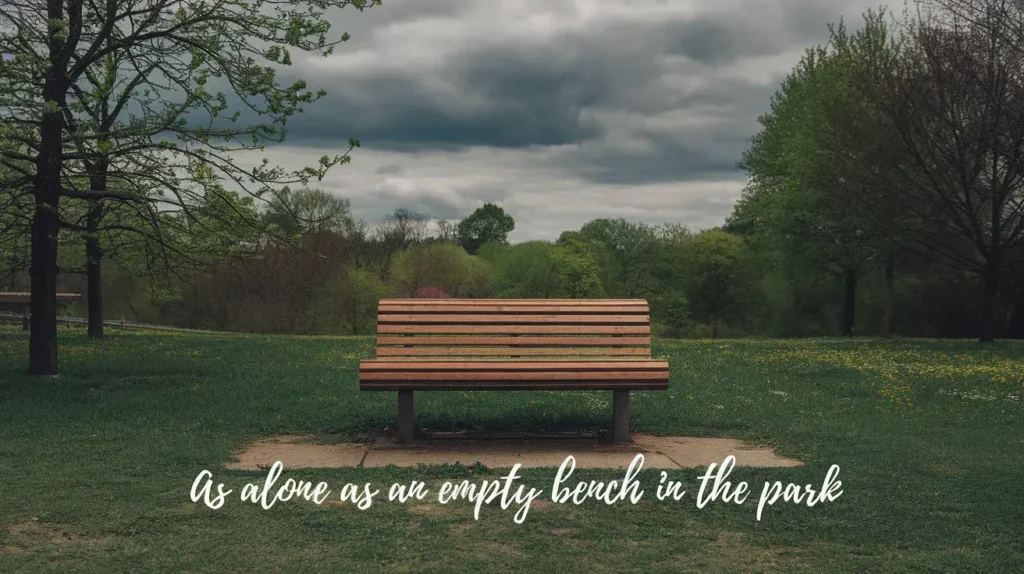
As Alone as an Empty Bench in the Park
Meaning:
Symbolizes quiet stillness and absence of companionship.
Usage Insight:
Perfect for storytelling scenes that emphasize silence.
Examples:
- He waited as alone as an empty bench in the park.
- The playground stood as alone as a bench at sunset.
As Alone as a Boat Lost at Sea
Meaning:
Represents emotional confusion and lack of direction.
Usage Insight:
Use when expressing vulnerability or uncertainty.
Examples:
- She felt as alone as a boat lost at sea.
- His thoughts drifted as alone as a small boat on endless water.
As Alone as a Shadow at Dusk
Meaning:
Suggests fading presence and quiet separation.
Usage Insight:
Effective in reflective or melancholic writing.
Examples:
- He walked home as alone as a shadow at dusk.
- Her laughter faded, leaving her as alone as a shadow in twilight.
As Alone as a Desert Under the Sun
Meaning:
Represents vast emptiness and emotional dryness.
Usage Insight:
Best for intense loneliness or isolation.
Examples:
- She felt as alone as a desert under the sun.
- His room seemed as alone as a desert stretching endlessly.
As Alone as a Single Raindrop on Glass
Meaning:
Symbolizes fragile isolation.
Usage Insight:
Works beautifully in poetic descriptions.
Examples:
- He felt as alone as a single raindrop sliding down glass.
- Her tears fell, as alone as one drop against the window.
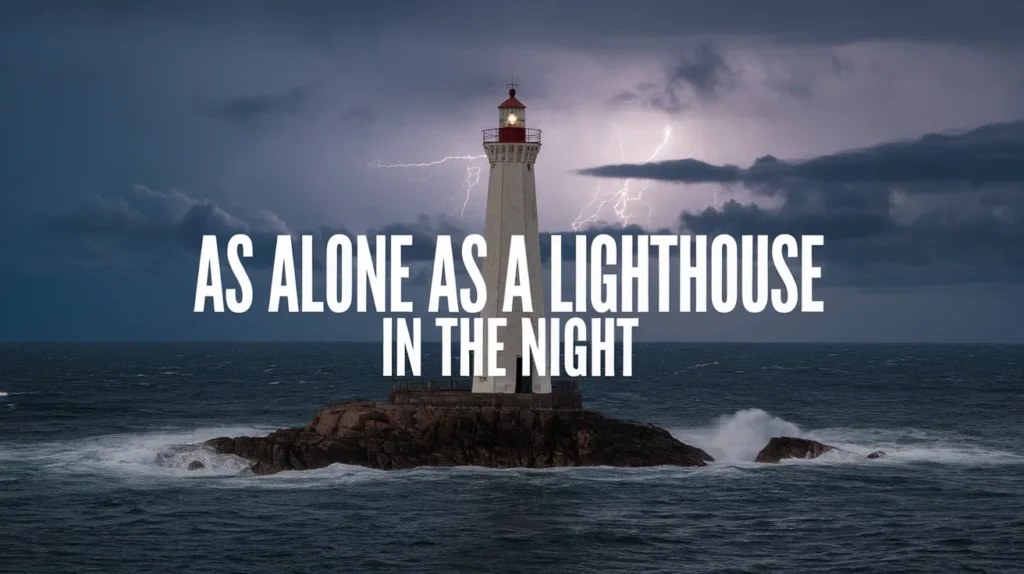
As Alone as a Lighthouse in the Night
Meaning:
Suggests solitude combined with purpose.
Usage Insight:
Use when describing someone isolated but strong.
Examples:
- She stood as alone as a lighthouse in the night, guiding others.
- His voice echoed as alone as a lighthouse against the dark sea.
As Alone as an Island in the Ocean
Meaning:
Represents separation from others.
Usage Insight:
A classic comparison that works in many writing styles.
Examples:
- He felt as alone as an island in the ocean.
- The old house stood as alone as an island in a quiet field.
As Alone as a Forgotten Path in the Woods
Meaning:
Suggests neglect and quiet abandonment.
Usage Insight:
Strong for descriptive storytelling.
Examples:
- She felt as alone as a forgotten path in the woods.
- His dreams lay as alone as an overgrown trail.
As Alone as a Candle in a Dark Room
Meaning:
Represents small presence surrounded by darkness.
Usage Insight:
Ideal for emotional or symbolic writing.
Examples:
- He stood as alone as a candle in a dark room.
- Her hope flickered, as alone as a single flame at midnight.
As Alone as Snow Falling at Night
Meaning:
Suggests silent and peaceful solitude.
Usage Insight:
Use when describing gentle or calm loneliness.
Examples:
- She felt as alone as snow falling at night.
- The street lay as alone as snow drifting under streetlights.
As Alone as a Closed Book on a Shelf

Meaning:
Symbolizes hidden stories and quiet waiting.
Usage Insight:
Great for reflective or thoughtful writing.
Examples:
- He felt as alone as a closed book on a dusty shelf.
- Her thoughts rested as alone as unread pages.
As Alone as the Moon Before Dawn
Meaning:
Represents quiet isolation before change.
Usage Insight:
Perfect for hopeful or transitional moments.
Examples:
- She stood as alone as the moon before dawn.
- His sadness felt as alone as the fading moon in early light.
As Alone as a Tree After the Storm Has Passed
Meaning:
Suggests survival after hardship.
Usage Insight:
Works well when describing resilience and emotional endurance.
Examples:
- He felt as alone as a tree after the storm had passed.
- She remained as alone as a tree standing in the silent field.
How to Use Similes Effectively in Writing
Using the best similes for alone can transform simple sentences into powerful emotional expressions. Here are practical tips:
1. In Poems
Choose nature similes to create mood and rhythm. Keep comparisons clear and vivid.
2. In Stories
Use similes to reveal character emotions naturally. Avoid placing too many in one paragraph.
3. In Essays
Use similes sparingly to clarify complex ideas about isolation or independence.
4. In Songs
Select emotionally strong comparisons that connect instantly with listeners.
5. In Creative Descriptions
Focus on images readers can easily picture. The best figurative language examples feel natural and relatable.
Remember: A good simile adds clarity, not confusion. It should make the emotion stronger and easier to understand.
FAQs
1. What are the best similes for alone?
They are creative comparisons using “like” or “as” to describe loneliness, solitude, or independence in vivid ways.
2. What is the difference between a simile and a metaphor?
A simile uses “like” or “as” to compare two things. A metaphor directly states that one thing is another.
3. Why are similes important in literature?
Similes in literature help readers visualize emotions and create strong imagery.
4. Can similes be used in academic writing?
Yes, but carefully. They should clarify ideas rather than make the writing too poetic.
5. How can I create original similes?
Observe nature, emotions, and daily life. Then connect your feeling to something readers easily recognize.
Conclusion
The best similes for alone help us express one of the most complex human emotions with clarity and depth. They turn silence into imagery and loneliness into something readers can see and feel. Like a tree standing strong in an open field, a powerful simile gives stability and meaning to writing. Through thoughtful comparisons, solitude becomes poetic instead of empty. Whether you are crafting a poem, writing a story, or expressing personal reflection, similes enrich your words. They bring emotional truth, visual beauty, and stronger connection. When used wisely, they transform simple language into unforgettable expression. Master them, and even the quietest feelings will speak with strength and grace.
