

Anxiety is a feeling almost everyone experiences at some point. It can be quiet and subtle, or loud and overwhelming. Yet describing anxiety in clear, emotional language is not always easy. This is where similes become powerful tools. Similes compare one thing to another using the words “like” or “as,” helping readers understand emotions more vividly.
They are an important part of figurative language because they turn abstract feelings into clear mental images. When you explore the best similes for anxious, you find comparisons that make nervousness, fear, and tension easier to see and feel. Just like a tree standing firm during a storm, language can grow stronger when rooted in meaningful imagery. Trees are powerful symbols of strength, resilience, growth, wisdom, and human emotion.
In the same way, similes in literature and storytelling help us express anxiety with clarity, depth, and emotional truth.
What Is a Simile?
A simile is a figure of speech that compares two different things using “like” or “as.” It helps make ideas more vivid and relatable by connecting them to familiar experiences.
Example:
He felt as anxious as a leaf trembling in the wind.
This comparison paints a clear picture of nervous movement and instability. That is why similes in literature and everyday writing are so effective—they make emotions visible.
As Anxious as a Leaf in a Storm
Meaning:
Represents nervousness and lack of stability.
Usage Insight:
Perfect for describing visible fear or shaking tension.
Examples:
- She stood as anxious as a leaf in a storm before the interview began.
- His hands trembled, as restless as leaves caught in strong wind.
As Anxious as a Cat in a Room Full of Strangers
Meaning:
Symbolizes alertness and unease.
Usage Insight:
Ideal for social anxiety or uncomfortable situations.
Examples:
- He felt as anxious as a cat in a room full of strangers.
- She glanced around, cautious and uneasy in the unfamiliar crowd.
As Anxious as the Sky Before Thunder
Meaning:
Represents tension building before something happens.
Usage Insight:
Works well in dramatic storytelling.
Examples:
- The room felt as anxious as the sky before thunder.
- Her silence stretched tight, like clouds heavy with rain.
As Anxious as a Student Waiting for Results
Meaning:
Suggests anticipation mixed with worry.
Usage Insight:
Perfect for everyday, relatable comparisons.
Examples:
- He was as anxious as a student waiting for exam results.
- She checked her phone repeatedly, nervous and hopeful at once.
As Anxious as a Bird Trapped Indoors
Meaning:
Represents restless energy and desire for escape.
Usage Insight:
Use when describing frustration and confinement.
Examples:
- She paced as anxious as a bird trapped indoors.
- His thoughts fluttered wildly against invisible walls.
As Anxious as a Clock Ticking Too Loudly
Meaning:
Symbolizes pressure and awareness of time.
Usage Insight:
Ideal for deadlines and urgent situations.
Examples:
- He felt as anxious as a clock ticking too loudly in a silent room.
- The deadline loomed, each second echoing in his mind.
As Anxious as a Boat in Rough Waters
Meaning:
Represents instability and emotional turbulence.
Usage Insight:
Perfect for describing overwhelming situations.
Examples:
- She felt as anxious as a boat in rough waters.
- His heart rocked inside him like waves striking a fragile hull.
As Anxious as a Candle Flickering in the Wind
Meaning:
Symbolizes fragile hope under pressure.
Usage Insight:
Works beautifully in poetic writing.
Examples:
- Her confidence felt as anxious as a candle flickering in the wind.
- His courage wavered, thin and trembling in uncertainty.
As Anxious as a Deer in Headlights
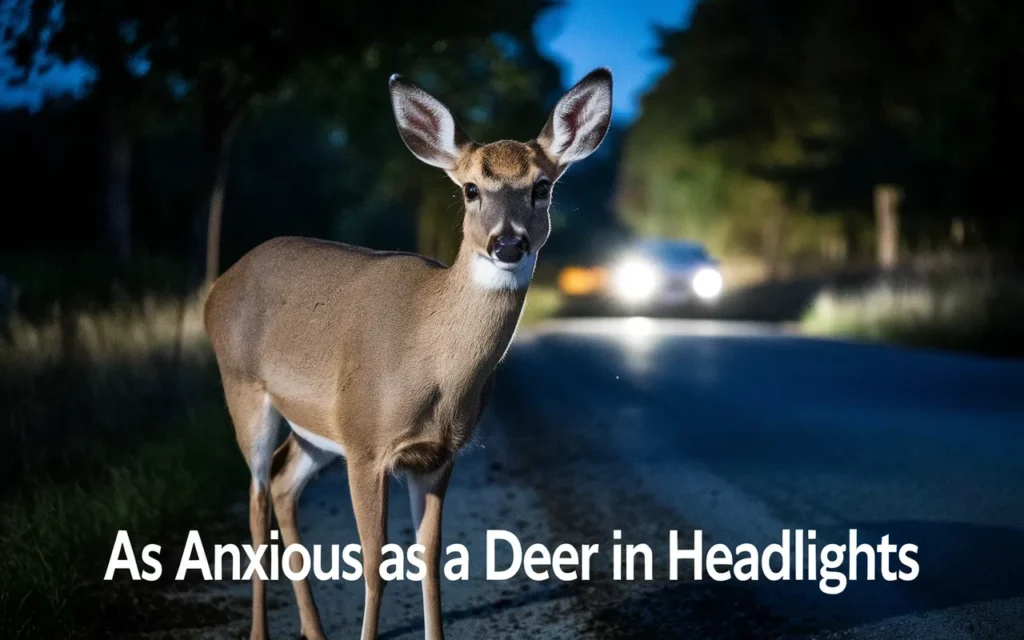
Meaning:
Represents sudden fear and shock.
Usage Insight:
Ideal for moments of surprise or panic.
Examples:
- He froze as anxious as a deer in headlights.
- She stared at the unexpected question, stunned and uneasy.
As Anxious as a Tightrope Walker
Meaning:
Symbolizes careful balance and fear of falling.
Usage Insight:
Use when describing high-pressure situations.
Examples:
- She spoke as anxious as a tightrope walker above the crowd.
- Every word felt like a step over open air.
As Anxious as a Seed Beneath the Soil
Meaning:
Represents hidden worry before growth.
Usage Insight:
Great for symbolic or reflective writing.
Examples:
- He felt as anxious as a seed beneath the soil before spring.
- Her uncertainty stirred quietly under the surface.
As Anxious as a Door Half Open
Meaning:
Suggests uncertainty and suspense.
Usage Insight:
Perfect for mystery or anticipation.
Examples:
- The moment felt as anxious as a door left half open.
- She hesitated, unsure of what waited beyond.
As Anxious as a Runner Before the Starting Gun
Meaning:
Represents nervous anticipation before action.
Usage Insight:
Ideal for competitive or performance settings.
Examples:
- He stood as anxious as a runner before the starting gun.
- Her breath came quickly as she waited for her cue.
As Anxious as Ice Cracking on a Lake
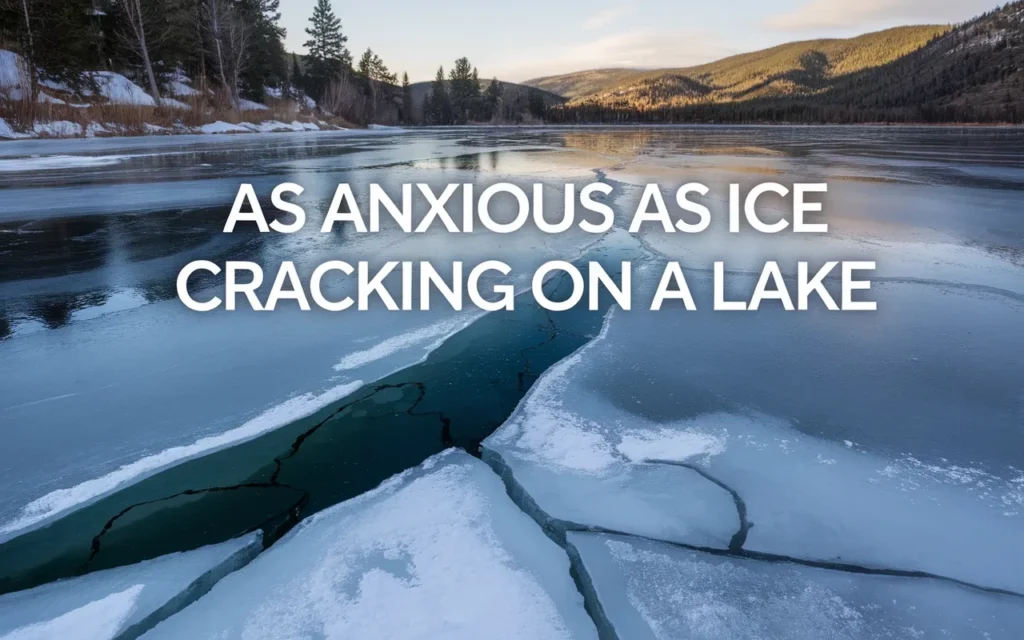
Meaning:
Symbolizes tension about to break.
Usage Insight:
Use in dramatic or emotional scenes.
Examples:
- The silence felt as anxious as ice cracking on a lake.
- Her composure seemed thin and fragile under pressure.
As Anxious as a Tree Facing Its First Storm
Meaning:
Represents vulnerability mixed with growth.
Usage Insight:
Powerful for describing new challenges.
Examples:
- He felt as anxious as a tree facing its first storm.
- She braced herself, unsure but ready to grow stronger.
How to Use Similes Effectively in Writing
Using the best similes for anxious can make emotional writing stronger and more relatable.
1. In Poems
Choose nature similes to express tension and vulnerability. Keep imagery simple and clear.
2. In Stories
Show anxiety through comparisons instead of directly stating it. This adds depth to characters.
3. In Essays
Use similes carefully to clarify emotional experiences or psychological themes.
4. In Songs
Select vivid comparisons that listeners can easily picture and feel.
5. In Creative Descriptions
Avoid clichés. Make your comparisons fresh and meaningful.
A well-crafted simile should clarify emotion, not complicate it.
FAQs
1. What are the best similes for anxious?
They are creative comparisons using “like” or “as” to describe nervousness, tension, and worry in vivid ways.
2. What is the difference between a simile and a metaphor?
A simile uses “like” or “as.” A metaphor directly states that one thing is another.
3. Why are similes important in literature?
Similes in literature create imagery and help readers connect emotionally with characters.
4. Can similes be used in academic writing?
Yes, but they should clarify complex ideas rather than distract from the main argument.
5. How can I create original similes for anxiety?
Observe nature, daily life, and physical reactions to stress. Then connect those images to the feeling you want to describe.
Conclusion
The best similes for anxious give language the power to express complex emotions clearly and beautifully. They turn invisible worry into vivid imagery readers can see and feel. Like trees that grow stronger after storms, powerful similes deepen writing through meaningful comparisons. They enrich poems, stories, essays, and songs with emotional honesty and clarity. When used thoughtfully, they transform simple sentences into compelling figurative language examples. Anxiety becomes more understandable, relatable, and human. Master these comparisons, and your writing will reflect emotion with strength, precision, and depth.
